Barcodes, are fascinating things, first brought into the UK in 1972 as shelf edge strips, then onto product in 1983 after an agreement on international standards was reached to cover the whole supply chain. The Standards are now upheld globally by a non-profit organisation called GS1. Every supplier and retailer uses barcodes daily. However, for Amazon product barcodes are crucial and it’s really important that both vendors and sellers understand all aspects of them.
GS1 barcodes for Amazon products
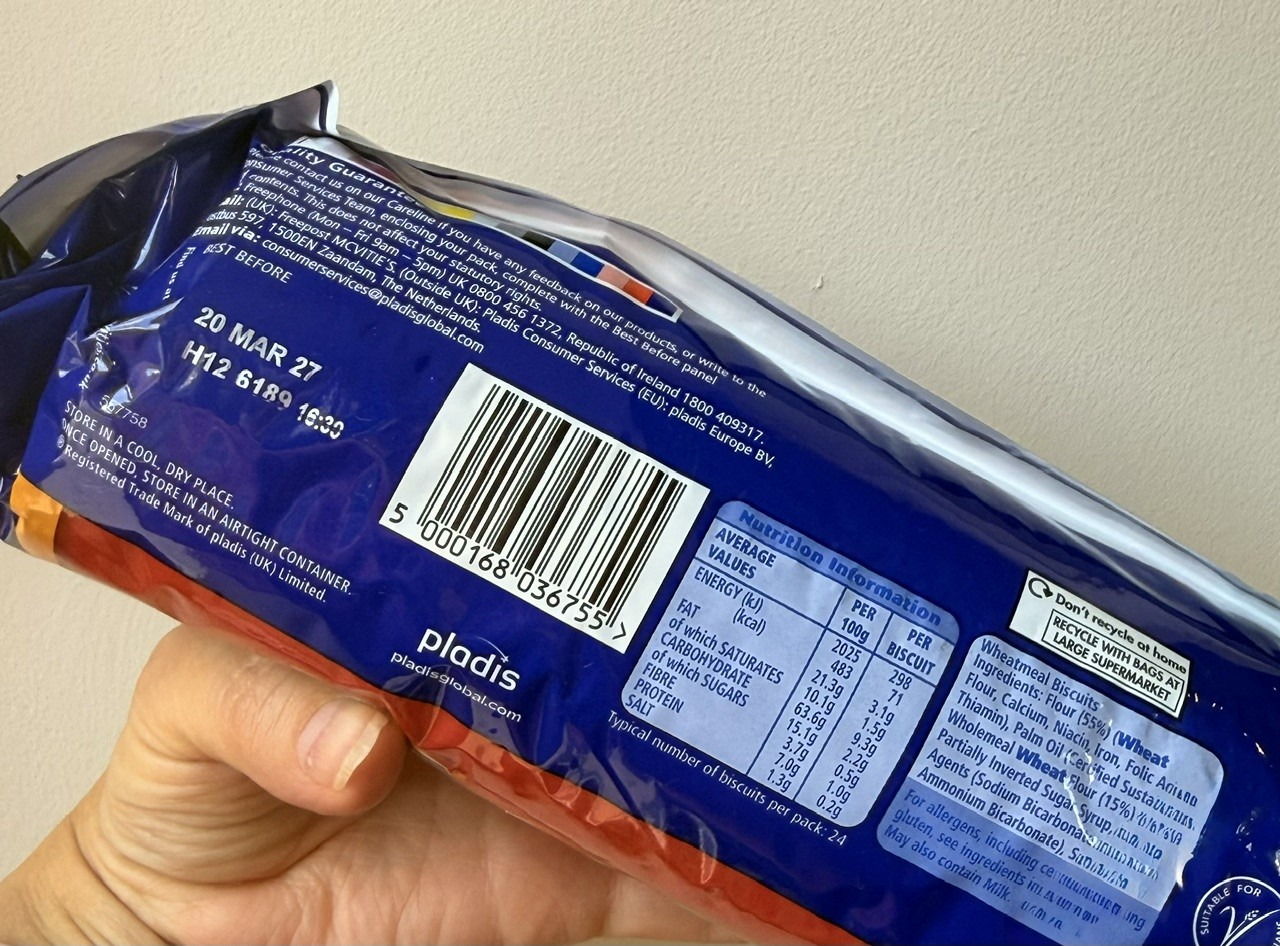
All products should have a barcode on them. If in the UK or Europe it will be a European Article Number (EAN, always 13 digits long), whereas in the US it’s more likely to be a Universal Product Code (UPC-A, usually 12 digits long). This barcode allows a retailer to scan the unit and identify what it is immediately.
Typically individual products are sold to retailers in cases. These cases also have barcodes affixed to them which detail that “this is a case of X with Y units.” Typically these barcodes are Global Traded Identification Numbers (GTIN’s with 14 digits) or Interleaved Two of Five (ITF, of 14 digits) style barcodes. They differ purely on the number of digits in the barcode structure.
Whichever barcodes you use you should have purchased GS1 barcodes, typically in batches known as Ranges. Each Range is assigned to a company. You get a digital certificate proving that you own that particular range of barcodes. This GS1 barcode certificate is crucial when trading with Amazon. It proves that you have the right to create and maintain a product listing on the site.
There is another element which supports this called Brand Registry. This is a process which involves proving to Amazon that you own the intellectual property (IP) to your brand.
Pallet and Carton barcodes for Amazon Vendors
When moving stock into Amazon, or any other retailer, a supplier needs to define what is in the shipping unit. Whether this is a pallet or a shipping carton, there needs to be a unique barcode on it. This barcode is a Serialised Shipment Container Code (SSCC) and, because the contents can vary the code must link back to a dynamic data source. Typically this is an Advanced Shipping Notification (ASN), sent to the retailer when the stock leaves the supplier’s warehouse.
The ASN, often sent via Electronic Data Interchange (EDI) will state how many pallets or cartons are being delivered and what each one contains. It might be a single product or different ones on a pallet. The SSCC tells the retailer which items they are expecting and in what quantities.
For Vendors supplying Amazon, the SSCC code is incredibly important as it means they can “Auto-Receive” pallets to expedite putting the stock away. If the ASN is detailed and tells Amazon that pallet A has twenty cases of product Z and fifty cases of product Y, identified by SSCC 1234 on the pallet they can receive all those units by just scanning the one SSCC barcode. This reduces the time to receive and makes the stock available for consumers more quickly.
If a supplier doesn’t have the functionality to create SSCC barcodes, Amazon’s vendor central can help with that. As part of the ASN process you can specify that you need to create package level barcodes and Amazon will generate AMZNCC (container-level Amazon barcodes) for you. These work in exactly the same was as SSCC barcodes. You specify items and quantities per shipper or pallet and apply the correct label as required.
Inbound Barcodes for Amazon Sellers
For Sellers using Amazon’s Fulfilled by Amazon (FBA) service an additional barcode is used. When the Seller sends stock to an Amazon Fulfilment Centre (FC) a barcode known as FNSKU (Fulfilment Network SKU) is added to the product. This not only identified the product (originally from it’s EAN/GTIN and now linked to Amazon’s internal reference: ASIN) but also the individual Seller who sent it in. This means that if two Sellers are selling the same product and sending it into the same FC Amazon can tell which exact item came from which exact supplier.
Barcode Issues
When supplying Amazon is critical that certain steps are met to ensure smooth delivery, all of which centre around barcodes:
- Set up your catalogue correctly using the right product hierarchy and the right barcodes
- When confirming orders and creating shipments ensure your ASN includes SSCC or AMZNCC-level data to tell Amazon what to expect in each box or pallet
- Ensure that the correct SSCC or AMZNCC labels are on the correct pallet or box.
The last one sounds obvious but it’s one of the most common mistakes that cause receive issues. I recently saw an example in one of Amazon’s Cross Dock (IXD) sites of two pallets from a supplier where:
- The catalogue set-up was correct. Product A and product B
- The ASN was perfect, Pallet X=Product A, Pallet Y=Product B
- The labels were on the wrong pallets, Pallet X=Product B, Pallet Y=Product A
The supplier sent the two pallets to the Cross Dock site, they were auto received as all the data was great and the labelling looked good. They were immediately sent out to their destination Fulfilment Centres where it was discovered that whilst Pallet X was in Edinburgh it was product B on it whilst Peterborough had Pallet Y with product A…the wrong way round.
This meant that the two sites had to:
- Relabel the stock
- return the stock to the Cross Dock Site
- Send back out to the correct Fulfilment Centre
Just one labelling error meant the products were not on sale for two weeks, despite being in the Amazon network. This caused lost sales.
The Future
Data integrity and barcode information are only going to become more important in future. GS1 have Project Sunrise currently running to encourage both suppliers and retailers to move from traditional 1D “stripey” barcodes to a more modern 2D QR barcode.
QR barcodes can hold a lot more data which means both retailers and consumers can scan for more information. For example:
- Product Identifiers: The Global Trade Item Number (GTIN) used at retail checkout.
- Traceability Data: Batch/lot numbers, expiration/use-by dates, and precise serial numbers for anti-counterfeiting.
- Consumer Information: Extended packaging data such as nutritional facts, allergen warnings, and sustainability information.
- Digital Experience URLs: Links to how-to videos, manuals, recipes, and warranty registrations.
As ever, Amazon will be at the forefront of digital innovation, so we encourage our clients to be informed of these changes. Your GS1 representative can often provide updates and information about developments in the industry.