Amazon Sponsored Brands ads have changed in recent months. In this blog we’ll cover:
- What Sponsored Brands are
- What has changed with Sponsored Brand Product Collection ads
- How the new format works
- The impact on Brand Store traffic
- How ad conversion rate has changed since
- Challenges for smaller catalogues
- Our recommendations for your Sponsored Brands strategy
What are Sponsored Brands?
Sponsored Brands are one of Amazon’s most prominent advertising formats. The often appear in the top-of-search placement, helping brands achieve high visibility when shoppers are actively searching for products.
There are three main Sponsored Brand formats:
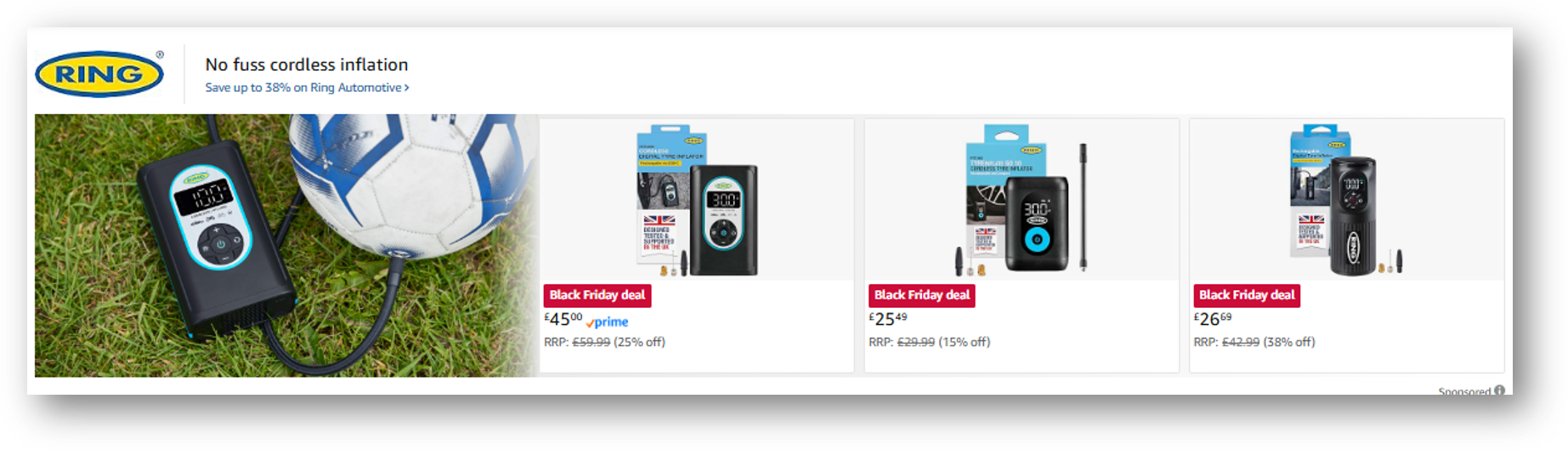
- Product Collection – which displays products as well as brand messaging
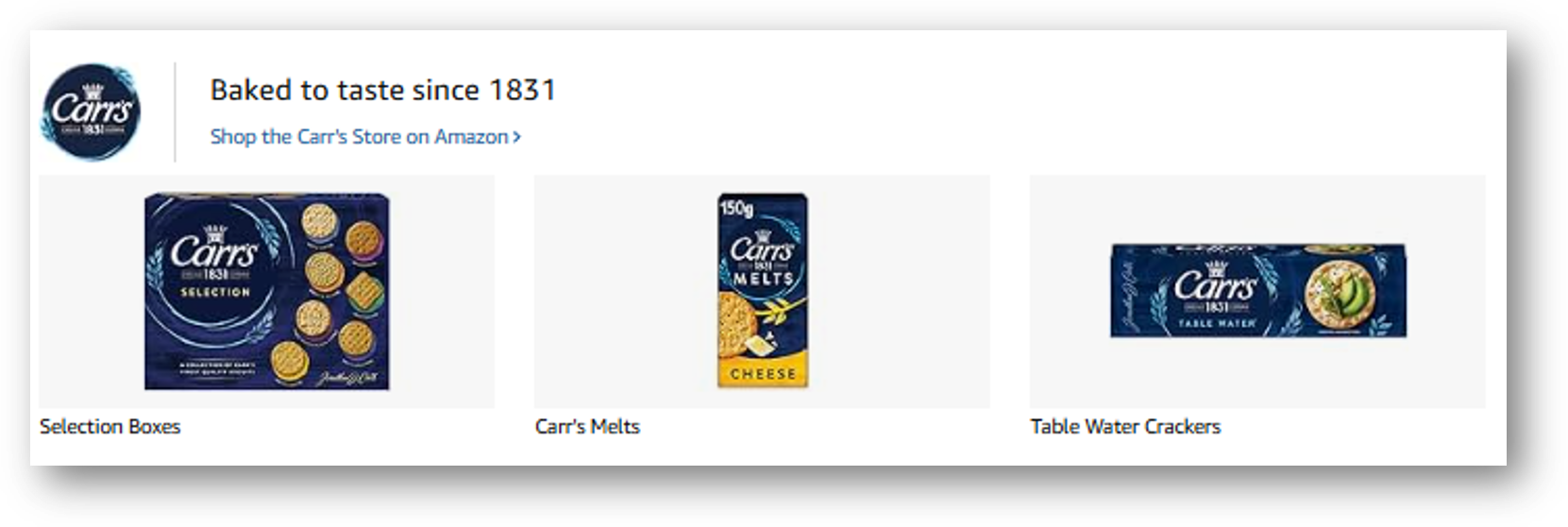
- Store Spotlight – which displays links to different brand store pages
- Sponsored Brand Video – providing motion alongside products or brand store links
Product Collection
Store Spotlight
Sponsored Brand Video
What has changed with Sponsored Brand Product Collection ads?
Historically, Product Collection ads have been popular because they combined product visibility with brand messaging and creative assets. However, in early 2026, Amazon introduced a new AI-powered Sponsored Brand Product Collection experience.
The previous version of Product Collection ads included:
- A brand logo
- A custom headline
- A lifestyle or creative image
- Up to three featured ASINs
The new Sponsored Brand Product Collection serves without the lifestyle image from top-of-search placements and focuses more heavily on products. Advertisers can now feature between three and ten ASINs within a single ad, while Amazon automatically optimises which products appear in what order. Existing Sponsored Brand Product Collection campaigns will continue running, but new campaigns can only be created using the updated format, and the image is no longer visible top of search for old ads either.
Other placements, such as bottom-of-search continue to use the image and logo, with the headline displaying when you roll your mouse over the ad unit.
How does the new Product Collections format work?
Amazon is now using automation to respond to retail readiness and conversion opportunities. The platform can:
- Prioritise products most likely to convert
- Change the order of featured ASINs based on shopper behaviour
- Remove products that do not currently hold the Buy Box
This means advertisers have less control over the exact presentation of products, but Amazon is aiming to improve performance by showing shoppers the products most likely to lead to a purchase.
Impact on Brand Store Traffic and brand messaging
One of the biggest implications of these changes is the reduction in traffic being directed to Brand Stores. Under the previous Product Collection format, a larger proportion of the ad encouraged shoppers to enter the Brand Store environment. Clicks on the logo, headline or image would direct traffic to the brand store, whereas clicks on the products would send traffic to those specific product detail pages. Taking more of the traffic to the brand store gave brands an opportunity to showcase wider product ranges and tell a more complete brand story without competitor distractions.
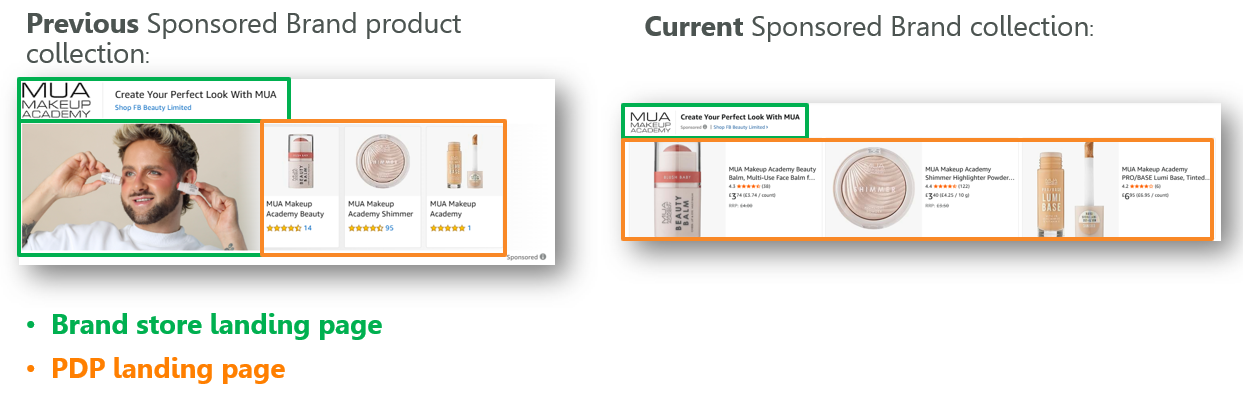
The new Product Collection format is far more product-focused. More of the clickable surface area directs shoppers straight to Product Detail Pages, shortening the path to purchase but reducing opportunities for Brand Store engagement. As a result, many brands may notice a shift in how these ad sales are attributed. Brand Store traffic and Brand Store-attributed sales may decline, while Product Detail Page traffic and direct conversions increase.
The removal of creative imagery also has an impact on the ability of this ad format to communicate brand messaging. Historically, brands could use Sponsored Brands to, build awareness, suggest usage occasions or demonstrate the product, promote new ranges and strengthen brand identity. Today, Product Collection ads are much more focused on driving conversions. We’ve been describing the change internally as taking the ‘brand’ out of Sponsored Brand ads. This means other Sponsored Brand formats are becoming increasingly important for brand-building activity.
How ad conversion rate has changed
Based on the data we’ve reviewed across client accounts, there are indications that the new Product Collection format is improving conversion rates. By directing shoppers straight to Product Detail Pages, Amazon is shortening the path to purchase. We’ve observed examples where:
- Sponsored Brand sales increased year-on-year
- Purchase volumes grew despite lower spend
- Conversion rates improved compared to the previous format
However, we have also seen that fewer of the conversions are taking place on the brand store vs the product detail pages. We won’t have a clear picture until more time has elapsed and we have more clean data, but for brands focused on sales conversion, this could be a positive development.
Challenges for Smaller Catalogues
Another consequence of the update is Amazon’s requirement for at least three advertisable ASINs to access Product Collection placements at the top of search.For brands with large catalogues, this is unlikely to present an issue. However, smaller brands, newer brands or those operating within restricted categories may find it more difficult to meet the 3-product minimum.
In these situations, Virtual Bundles and Virtual Multipacks may provide a useful workaround. By creating additional purchasable combinations of existing products, brands can increase the number of eligible ASINs available for advertising and access inventory that may otherwise be unavailable.
Our Sponsored Brands recommendations
To address the loss of branded space and creative imagery from top-of-search placements, we recommend placing greater emphasis on Sponsored Brand Video campaigns. Video remains the strongest Sponsored Brand format for building awareness, showcasing products in use and communicating key brand messages. It also tends to have higher click-through rates than other SB formats, although the purchase rate may be lower. Brands are more likely to have video content with helpful messaging than maybe was true in the past. This is particularly true now that vertical video formats are accepted. For brands without much video content, tools such as Amazon Creative Studio can also help create video assets, add simple movement to existing still images or even make helpful edits and amendments to existing video. This is one of our key Sponsored Brands video tips.
Brands that rely heavily on Brand Store traffic should also consider increasing their use of Store Spotlight campaigns. Unlike the new Product Collection format, Store Spotlight ads are specifically designed to encourage shoppers to browse different areas of a Brand Store, making them a valuable option for new launches, category education and product range discovery.
When building Product Collection campaigns, product selection is now more important than ever. Amazon allows advertisers to showcase up to ten ASINs within a single ad. The main image, title, price and star ratings are all featured, so it is important to choose products that are visually appealing, highly rated and representative of the wider catalogue.
Conclusions
The evolution of the Product Collection type represents a significant shift in Amazon’s advertising ecosystem and will have implications for your Sponsored Brands strategy.
The new format places greater emphasis on conversion and retail readiness, while reducing opportunities for traditional brand storytelling and Brand Store engagement. Early indications suggest that advertisers may benefit from improved conversion rates, but this comes with a greater reliance on Product Detail Pages for conversion and alternative Sponsored Brand formats to communicate brand messaging.
For businesses advertising on Amazon, it is becoming increasingly important to think carefully about traffic flows, campaign objectives and the role each Sponsored Brand format plays within the wider advertising strategy.
At MinsterFB, we’re already helping brands adapt to these changes through Sponsored Brand Video, Store Spotlight campaigns and product detail page optimisation. If you’d like to discuss how these updates could impact your account, please speak with your Advertising Executive.